
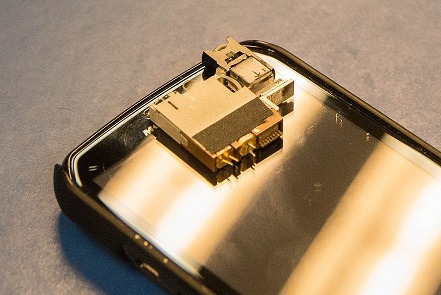
Sachs said the acquisition will bring together the science and engineering teams as well as manufacturing capabilities of both companies. The combined team includes experts in imaging technologies, laser diode light sources, thin films, digital and analog ASIC design, image processing software, optics and system design.
“Adding highly efficient, wavelength-stabilized diode and diode pump laser components to our substantial technology portfolio strengthens our position as the most advanced vertically-integrated projection light engine manufacturer,” said Sachs in a press release.
Ultimately, Niesen said the acquisition of Alfalight’s technology will allow Compound Photonics’ chip design team in Clark County to produce a more efficient product. That’s quite the feat, he noted, considering scale and complexity.
“The chip we’re designing here (in Vancouver) does a myriad of things inside the projection engine, including driving the lasers – telling them when to be on, when to be off and which color to fire when,” he said. “The mathematics are mindboggling… There are more than two million pixels that have to be activated, and they have to be activated across three colors (red, green, blue) and in a way that’s video speed.”
Niesen said that demand for hardware solutions such as projection technology is growing rapidly in today’s mobile market as smartphone vendors and manufacturers search for ways to distinguish themselves from the competition.
“If you start thinking about all the things that have been integrated into your smartphone – cameras, video, GPS… the next logical technology to be integrated is a small projector. That’s what we’re seeing in our interactions with handset manufacturers now that we can come to them [and say], ‘this is full 1080p, this is bright enough to be seen in a normally lit room and it has extremely efficient power consumption.’ All these things have come together and the timing is right for this new system to be integrated into smartphones.”
Niesen said consumers should start seeing Compound Photonics’ technology in mobile devices in the second half of 2014.
{jathumbnail off}